
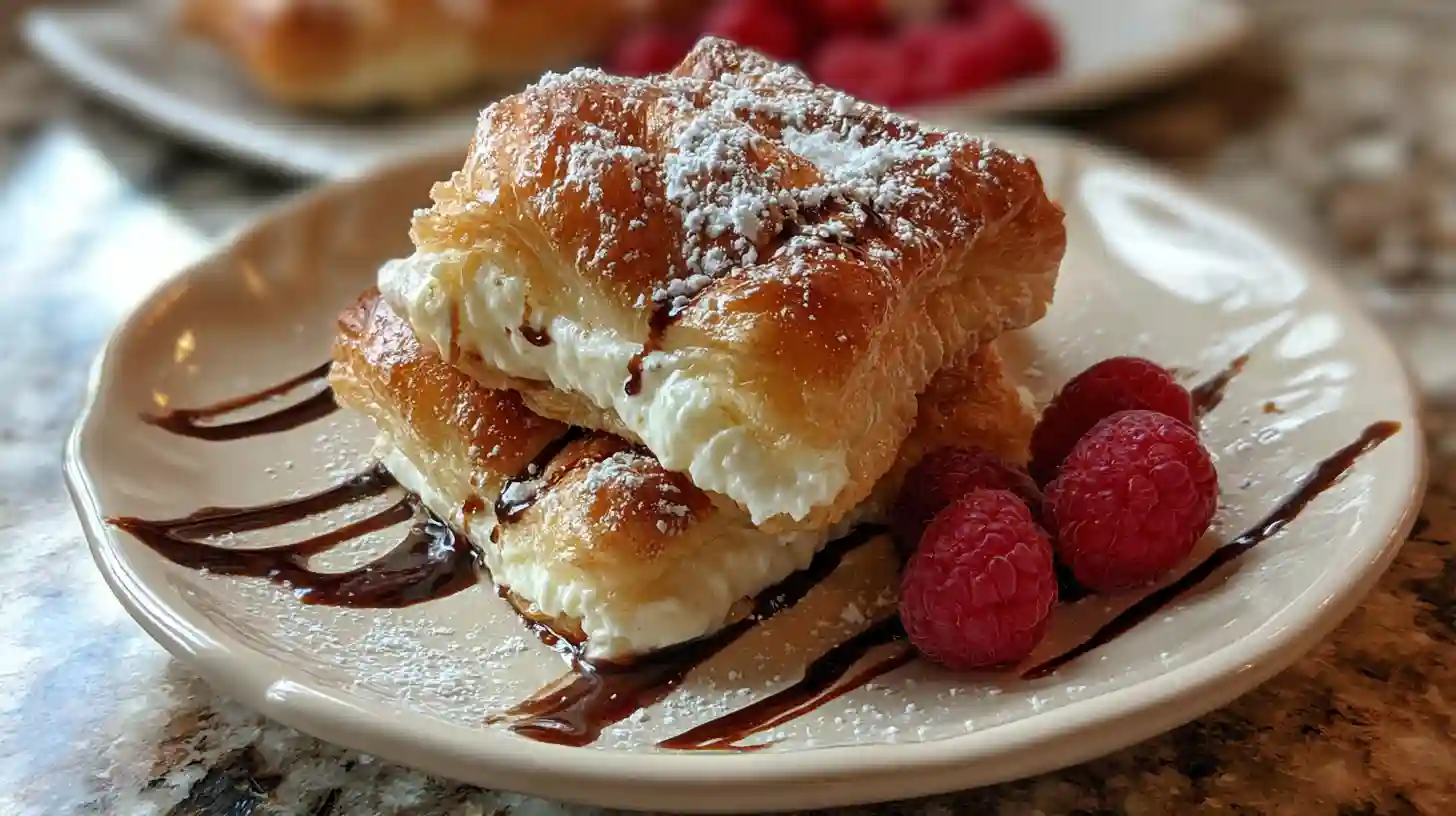
Some recipes disappear before they even cool down, and this Cheesecake Crescent Rolls Casserole is exactly that kind of dish. Buttery crescent dough on the bottom, a smooth cream cheese filling in the middle, another layer of dough on top – all covered in cinnamon sugar and baked until deep golden. It comes out of the oven in under 35 minutes, and it tastes like something that took much longer.
The filling is rich without being overpowering. Tangy cream cheese, vanilla, and just enough sugar to make it feel like a proper dessert. The cinnamon sugar on top caramelizes slightly during baking, giving every bite a little crunch. Cold or warm, it holds up well, and the leftovers firm up nicely overnight in the fridge – honestly, some people prefer it that way.
Six ingredients, one baking dish, and about ten minutes of hands-on time. That covers the whole thing.
Everything You Need
- 2 cans (8 oz each) refrigerated crescent roll dough
- 2 packages (8 oz each) full-fat cream cheese, softened to room temperature
- 1 cup granulated sugar, divided
- 1 teaspoon pure vanilla extract
- 1/2 teaspoon ground cinnamon
- 1/4 cup unsalted butter, melted
How to Make Cheesecake Crescent Rolls Casserole
- Preheat your oven to 350°F (175°C) and lightly grease a 9×13-inch baking dish with butter or cooking spray.
- Unroll one can of crescent dough and press it flat across the bottom of the dish. Pinch all the seams together firmly so there are no gaps or open perforations.
- In a large mixing bowl, beat the softened cream cheese with 3/4 cup of the sugar and the vanilla extract until the mixture is completely smooth.
- Spread the cream cheese filling evenly over the bottom dough layer, pushing it all the way to each edge.
- Unroll the second can of crescent dough and lay it carefully over the filling. Press the seams shut again just as firmly as the first layer.
- Pour the melted butter slowly and evenly across the entire top surface of the dough.
- Stir the remaining 1/4 cup of sugar together with the cinnamon, then sprinkle the mixture evenly over the buttered dough.
- Bake for 28 to 32 minutes, until the top is deep golden brown and the center feels set when pressed gently.
- Remove from the oven and let the casserole rest in the dish for at least 15 minutes before slicing into squares.

Tips That Actually Make a Difference
Softening the cream cheese is not a step you can skip. Cold cream cheese leaves lumps in the filling regardless of how long you beat it. Pull it from the fridge 30 to 40 minutes early, or microwave each unwrapped block for about 15 seconds if you’re short on time.
Sealing the dough seams on both layers is what keeps the filling where it belongs. Most leaks happen because the perforations weren’t pressed flat. A fork works better than fingertips here – run it firmly along every seam on the top and bottom layers before the dish goes into the oven.
Don’t pull it out at the first sign of color. Light golden isn’t done. You want a deep amber across the whole top surface – under-baked dough tastes soft and pasty in a way that’s hard to come back from. If your oven runs cool, add 3 to 5 minutes and check again.
Waiting to slice is worth it. The filling is still loose right out of the oven. Give it 15 to 20 minutes and it sets into clean, sliceable squares instead of a messy spoonful.
Variations Worth Trying
Lemon zest stirred into the cream cheese filling changes the whole tone of the dessert. One tablespoon of fresh zest makes it feel brighter and less heavy, especially during warmer months when rich desserts can feel like too much.
Fresh fruit layered directly on top of the cream cheese filling – under the second piece of dough – works really well. Blueberries hold their shape nicely. Sliced strawberries and thin spreads of cherry jam are both solid choices too. Drain any canned fruit completely before using it, or the bottom layer turns soggy.
Flaky pastry wrapped around a sweet creamy filling is a concept with deep roots across baking traditions worldwide. Traditional Greek pastry preparation uses this same layered approach – bougatsa with semolina custard being one of the most recognized examples. For a nod in that direction, drizzle honey and a pinch of crushed walnuts over the top of this casserole right after it comes out of the oven. It adds warmth and texture that shifts the whole character of the dish in a subtle but noticeable way.
When Things Go Wrong
Filling that bubbled out during baking points to unsealed seams. It won’t ruin the flavor, but it makes the edges uneven and harder to slice cleanly. Next time, press both layers with a fork and run your fingers along every edge before it goes in.
A soggy or undercooked center usually means the oven temperature was too low or the bake time was cut short. Use an oven thermometer if yours is inconsistent, and bake until the center is genuinely firm to a light press – not just golden on top.
If the cinnamon sugar burned before the inside was set, your oven runs hot. Tent the dish loosely with foil for the last 8 to 10 minutes of baking. The surface stays protected while the dough and filling finish cooking underneath.
Storing Your Cheesecake Crescent Rolls Casserole
Cover the dish tightly with plastic wrap or transfer slices to an airtight container. Refrigerate for up to 4 days. The texture improves after a few hours of chilling – the filling firms up and the flavors settle together nicely. Cold slices straight from the fridge are genuinely good.
To reheat, place squares in a 300°F oven for 8 to 10 minutes or use an air fryer at 325°F for 4 to 5 minutes. The microwave is fast but softens the crust noticeably. Freezing isn’t recommended – cream cheese changes texture after thawing and the dough turns rubbery.
FAQ
Can I assemble this the night before baking?
Yes. Build the full casserole, cover it tightly with plastic wrap, and refrigerate overnight. Bake it straight from the fridge – add about 4 to 5 minutes to the bake time since the dish starts cold.
Can I use reduced-fat cream cheese?
You can, but the filling won’t be as smooth or rich. Low-fat versions release more moisture during baking, which can make the bottom dough layer slightly wet. Full-fat cream cheese gives the best texture and flavor here.
Are there similar desserts in other food traditions?
Several. Traditional Greek dessert preparation produces similar results – the traditional Greek galaktopita dessert, for example, layers pastry around a creamy custard filling in almost the same way. The approach is the same: flaky dough, creamy filling, baked together into something that cuts into neat portions.
How do I know when the casserole is actually done?
Look for deep golden brown across the entire top surface, not just at the edges. Press the center gently with a fingertip – it should feel firm and spring back slightly. The edges will also start pulling away from the sides of the dish when it’s ready.
Does this actually taste like cheesecake?
It tastes like a cheesecake pastry bar – the filling has the same creamy, tangy quality, but the crescent dough gives it a flakier, lighter texture than a traditional slice. Think of it as cheesecake’s easier, more casual version that you can make on a weeknight.
Cheesecake Crescent Rolls Casserole

Equipment
- 9×13-inch baking dish
- Electric hand mixer
- Large mixing bowl
Ingredients
- 2 cans refrigerated crescent roll dough 8 oz each
- 2 packages full-fat cream cheese, softened 8 oz each, room temperature
- 1 cup granulated sugar divided – 3/4 cup for filling, 1/4 cup for topping
- 1 tsp pure vanilla extract
- 1/2 tsp ground cinnamon
- 1/4 cup unsalted butter, melted 4 tablespoons
Instructions
- Preheat the oven to 350°F (175°C) and lightly grease a 9×13-inch baking dish.
- Press one can of unrolled crescent dough flat into the bottom of the dish, pinching all seams firmly shut.
- Beat the softened cream cheese with 3/4 cup sugar and the vanilla extract until completely smooth.
- Spread the cream cheese filling evenly over the bottom dough layer, reaching all edges.
- Lay the second can of unrolled crescent dough over the filling and press all seams firmly shut.
- Pour the melted butter evenly across the entire top surface of the dough.
- Mix the remaining 1/4 cup sugar with the cinnamon and sprinkle evenly over the buttered dough.
- Bake for 28 to 32 minutes until the top is deep golden brown and the center feels set when pressed gently.
- Cool in the dish for at least 15 minutes before slicing into squares and serving.
Notes
- Cream cheese must be fully softened or the filling will be lumpy.
- Press dough seams firmly with a fork to prevent filling from leaking out during baking.
- Do not underbake – the top should be deep golden, not light gold.
- Let rest 15 to 20 minutes before slicing so the filling sets properly.
- Store covered in the refrigerator for up to 4 days. Not recommended for freezing.