
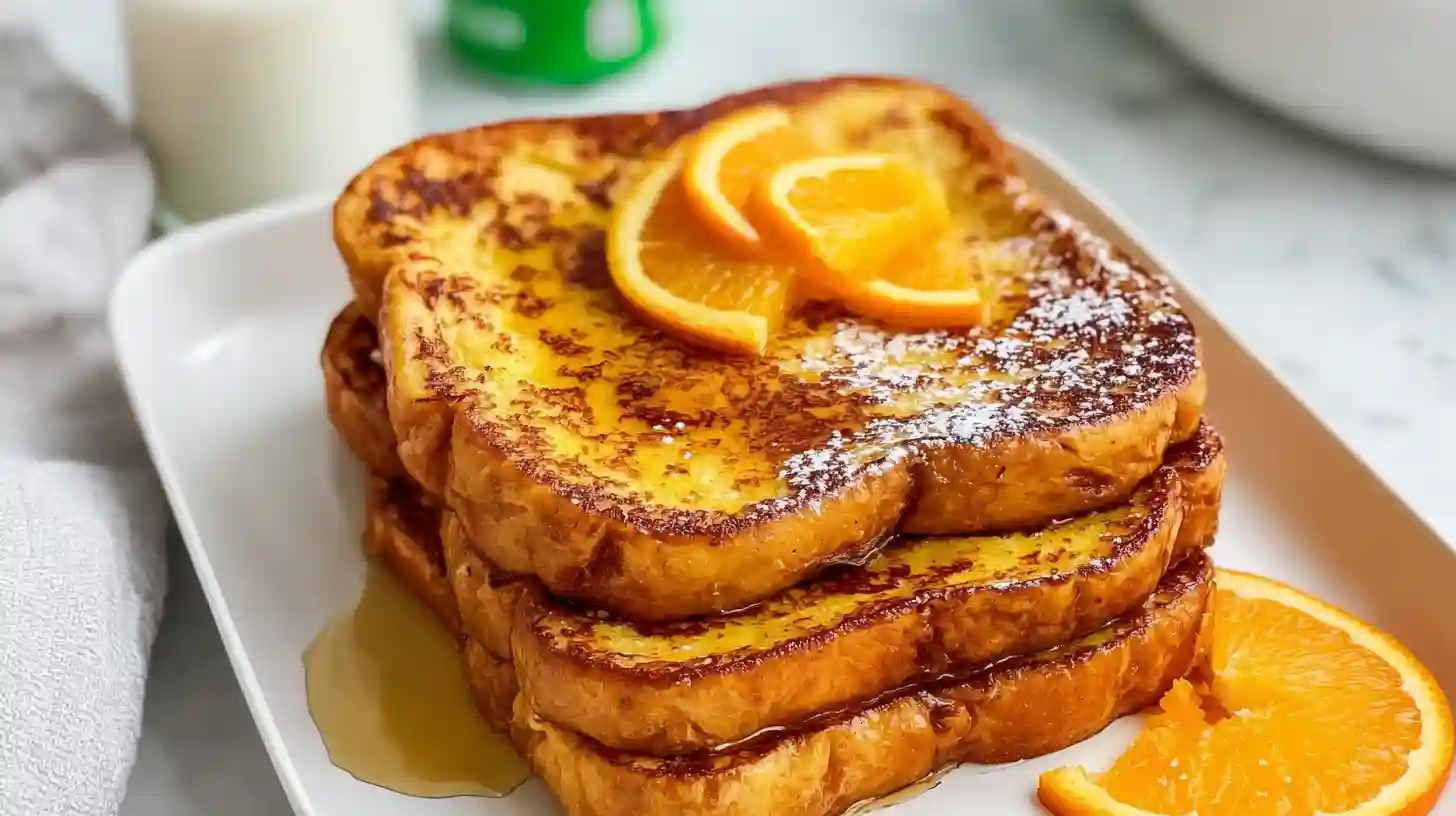
Last Sunday morning, I woke up to find half a bag of oranges that needed using before they went soft. My regular French toast felt too plain, so I grabbed a zester and transformed breakfast into something that tasted like sunshine on a plate. That first bite brought back memories of orange cream popsicles from childhood, except this Orange French Toast Recipe was infinitely better. My kids fought over the last slice, which tells you everything you need to know about how this turned out.
This recipe combines traditional French toast techniques with fresh orange juice and zest to create a breakfast that feels special without any extra effort. The citrus adds brightness that cuts through the richness of eggs and cream, creating layers of flavor you just do not get with vanilla alone. Each piece develops crispy golden edges while staying custardy in the center, and that hint of orange makes every bite interesting.
You can have this ready in about 15 minutes from start to finish. The custard takes two minutes to whisk together, and the bread cooks while you sip your coffee. This Orange French Toast Recipe works perfectly for lazy weekend mornings when you want something delicious but cannot spend an hour in the kitchen.
What Makes This Orange French Toast Special
Fresh orange zest provides the secret weapon here. Those tiny flecks contain concentrated citrus oils that perfume the entire custard with natural orange flavor. Juice alone would make the toast wet and bland, but zest delivers pure orange essence without extra liquid.
The combination of heavy cream and orange juice creates something magical that tastes similar to those classic orange creamsicles. Heavy cream provides richness and body, while orange juice adds tangy sweetness and brightness. Together they form a custard base that coats thick bread slices perfectly.
Using brioche bread instead of regular sandwich bread makes a noticeable difference. Brioche has enough structure to absorb custard without falling apart, plus its slightly sweet flavor complements the orange beautifully. The thick one-inch slices stay fluffy inside while developing that essential crispy exterior.
Orange French Toast Recipe Ingredients
- 8 slices brioche bread, cut into 1-inch thick pieces
- 2 large whole eggs
- 1/4 cup fresh orange juice, from about 1 medium orange
- 1/4 cup heavy cream or half and half
- 1 teaspoon fresh orange zest, from about 1 small orange
- 1 teaspoon vanilla extract or vanilla sugar
- 1 tablespoon unsalted butter for cooking
- Optional toppings: maple syrup, powdered sugar, fresh berries, cinnamon sugar, orange slices
How to Make Orange French Toast
Whisk the eggs thoroughly in a shallow bowl or pie dish until no white streaks remain. Add the orange juice, heavy cream, orange zest, and vanilla extract. Whisk everything together until completely combined and slightly frothy. You want that custard smooth and uniform so every piece of toast gets equal flavor.
Heat a large nonstick skillet or griddle over medium heat. This temperature matters more than you might think. Too hot and the outside burns before the center cooks through. Too cool and the bread dries out instead of developing that golden crust. Medium heat gives you the perfect balance.
Add one tablespoon of butter to your preheated pan and let it melt completely. Swirl the pan to coat the bottom evenly. Butter provides flavor and helps create that crispy exterior everyone loves on French toast.

Take one slice of bread and dip it into the custard mixture. Turn it over after a few seconds to coat the other side. The bread should feel moist throughout but not completely saturated or it will fall apart. About 3 to 5 seconds per side works perfectly for most bread types.
Lay the soaked bread directly into your hot buttered pan. You should hear a gentle sizzle immediately. Cook for about 3 to 4 minutes on the first side without moving it around. Resist the urge to peek underneath too soon or you will tear the golden crust.
Flip the toast when the bottom turns deep golden brown and feels set when you slide a spatula underneath. Cook the second side for another 3 to 4 minutes until equally golden. The toast should feel slightly firm to the touch when done, with no raw eggy wobble in the center.
Transfer finished pieces to a warm plate while you cook the remaining slices. Add a bit more butter between batches and wipe out any burnt bits to keep each piece looking perfect. Serve immediately topped with your favorite accompaniments.
Pro Tips for Perfect Results
- Use fresh orange juice and zest for the brightest flavor, bottled juice tastes flat by comparison.
- Whisk eggs completely to avoid white streaks or bits of congealed egg white on your toast.
- Keep finished toast warm in a 200 degree oven while cooking remaining batches.
- Wipe the pan between batches to prevent burnt butter bits from sticking to new pieces.
- Do not make bread slices thicker than 1.25 inches or the centers stay raw while outsides burn.
- Let custard sit for a minute after whisking so bubbles settle and zest distributes evenly.
Delicious Orange French Toast Variations
Create a chocolate orange version by adding one tablespoon of cocoa powder to the custard and topping finished toast with chocolate syrup. This tastes remarkably like those chocolate orange candies everyone loves during holidays.
Try a tropical twist by substituting half the orange juice with pineapple juice and serving with coconut flakes and macadamia nuts. The combination transports you straight to a beach vacation breakfast.
Make it extra special for brunch by adding one tablespoon of Grand Marnier or other orange liqueur to the custard. The alcohol cooks off but leaves behind sophisticated orange flavor that adults appreciate.
Smart Ingredient Substitutions
- Replace brioche with challah bread, thick-sliced French bread, or even sourdough for different textures.
- Use whole milk instead of heavy cream for a lighter version, though texture will be less rich.
- Try almond milk plus one tablespoon of cornstarch for a dairy-free option that still provides body.
- Substitute lemon or grapefruit juice and zest for different citrus flavors with similar results.
- Use maple syrup or honey in place of vanilla sugar if that is what you have available.
Storage and Make Ahead Tips
This Orange French Toast Recipe tastes best served fresh and hot from the pan. However, you can prep the custard mixture the night before and store it covered in the refrigerator. Just whisk it well again before using since ingredients may separate overnight.
Leftover cooked French toast keeps in the refrigerator for up to two days in an airtight container. Reheat pieces in a toaster or toaster oven until warmed through and crispy again. The microwave works but creates soggy toast that loses its appeal.
For freezer storage, let cooked toast cool completely, then place parchment paper between each slice. Wrap the stack tightly in aluminum foil or place in a heavy-duty freezer bag. Frozen Orange French Toast keeps for one to two months and reheats beautifully straight from frozen in the toaster.
Troubleshooting Common Issues
Why does my toast turn out soggy?
Soaking bread too long creates soggy French toast that never crisps properly. Dip quickly for just a few seconds per side rather than letting slices sit in custard. Also check that your pan is hot enough before adding toast.
Can I taste the orange flavor clearly?
Fresh orange zest makes all the difference for noticeable citrus flavor. Bottled juice alone tastes too subtle. Grate zest directly into the custard right before cooking for maximum orange essence.
What if my toast burns on the outside but stays raw inside?
Your heat is too high. Reduce to medium or even medium-low heat and cook a bit longer. Thicker bread slices need gentler heat to cook through without burning.
Frequently Asked Questions
What bread works best for Orange French Toast Recipe?
Brioche provides ideal texture and flavor, but challah, thick-sliced French bread, or sourdough all work beautifully. Avoid thin sandwich bread as it becomes too soggy and falls apart during cooking.
Can I make this recipe dairy-free?
Yes, substitute almond milk or oat milk for the heavy cream. Add one tablespoon of cornstarch to the milk to create similar thickness and body. Use dairy-free butter or coconut oil for cooking.
How many servings does this Orange French Toast Recipe make?
Eight slices typically serve four people as a main breakfast dish, or up to eight people when served alongside other breakfast items like eggs, bacon, and fruit.
Should I use salted or unsalted butter for cooking?
Unsalted butter works best because it lets you control the saltiness and has a higher smoke point than salted varieties. Salted butter can work in a pinch but may brown too quickly.
Can I double this recipe for a crowd?
Absolutely. Double all custard ingredients and cook in batches, keeping finished pieces warm in a 200 degree oven. Use two pans simultaneously if you have the stovetop space to speed things up.
What toppings pair best with orange French toast?
Maple syrup remains classic and delicious. Fresh berries, especially strawberries and blueberries, complement the citrus perfectly. Powdered sugar, whipped cream, orange marmalade, or honey all make excellent choices depending on your preferences.
Do I need to add sugar to the custard?
This recipe relies on naturally sweet orange juice and toppings for sweetness. You can add one to two tablespoons of sugar to the custard if you prefer sweeter French toast, but test it first as written.

Orange French Toast Recipe
Equipment
- Large nonstick skillet or griddle
- Shallow bowl or pie dish
- Whisk
- Spatula
- Zester or microplane
Ingredients
- 8 slices brioche bread cut into 1-inch thick pieces
- 2 large whole eggs
- 1/4 cup fresh orange juice from about 1 medium orange
- 1/4 cup heavy cream or half and half
- 1 teaspoon fresh orange zest from about 1 small orange
- 1 teaspoon vanilla extract or vanilla sugar
- 1 tablespoon unsalted butter for cooking, plus more as needed
- Optional toppings maple syrup, powdered sugar, fresh berries, cinnamon sugar, orange slices
Instructions
- Whisk the eggs thoroughly in a shallow bowl until no white streaks remain. Add the orange juice, heavy cream, orange zest, and vanilla extract. Whisk until completely combined and slightly frothy.
- Heat a large nonstick skillet or griddle over medium heat. This temperature ensures golden exterior without burning.
- Add 1 tablespoon butter to the preheated pan and let it melt completely. Swirl to coat the bottom evenly.
- Dip one slice of bread into the custard mixture, coating both sides. Soak for 3 to 5 seconds per side until moist but not completely saturated.
- Place the soaked bread directly into the hot buttered pan. You should hear a gentle sizzle. Cook for 3 to 4 minutes on the first side without moving it.
- Flip the toast when the bottom turns deep golden brown. Cook the second side for another 3 to 4 minutes until equally golden and slightly firm to the touch.
- Transfer finished pieces to a warm plate. Add more butter between batches and wipe out any burnt bits.
- Serve immediately topped with maple syrup, powdered sugar, fresh berries, or your favorite toppings.
Notes
- Use fresh orange juice and zest for brightest flavor, bottled juice tastes flat
- Whisk eggs completely to avoid white streaks or congealed egg bits
- Keep finished toast warm in 200°F oven while cooking remaining batches
- Wipe pan between batches to prevent burnt butter from sticking to new pieces
- Do not make bread slices thicker than 1.25 inches or centers stay raw
- Custard can be prepared night before and stored covered in refrigerator
- Leftover cooked toast keeps refrigerated 2 days or frozen 1-2 months
- Reheat in toaster or toaster oven for best texture