
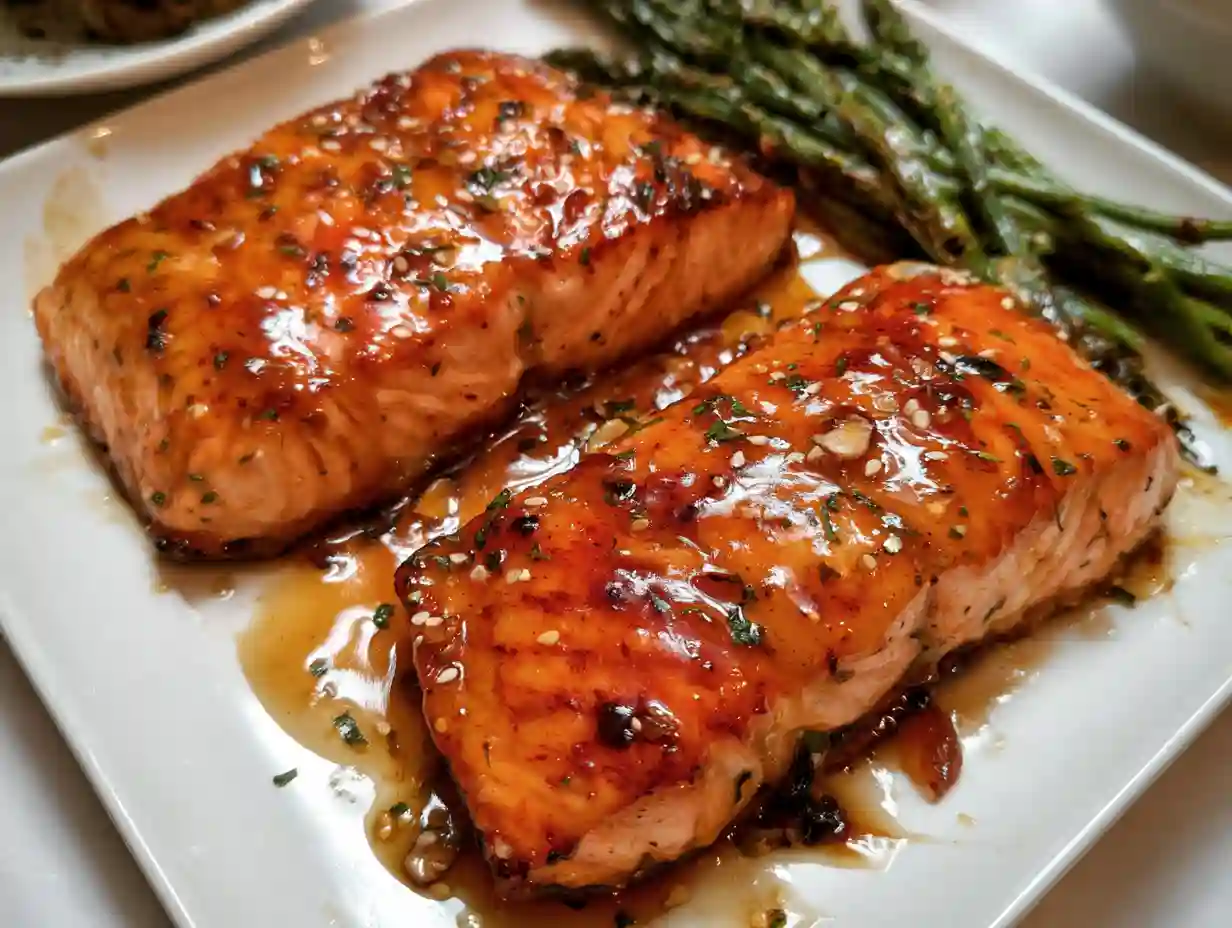
Some dinners are planned carefully, while others come together because the clock is moving faster than expected. This honey glazed salmon belongs in the second group. I first made it on one of those evenings when the refrigerator looked uninspiring, but a few salmon fillets, a jar of honey, and some garlic were enough to turn things around. The glaze took minutes to whisk together, and the oven handled the rest.
The finished fish is tender in the middle, lightly caramelized around the edges, and coated in a sweet, savory sauce with just enough garlic and soy flavor. It is an easy answer when you need salmon for dinner without spending the whole evening in the kitchen. Serve it with rice, green beans, or a crisp salad, and you have a meal that feels special but remains wonderfully practical.
Honey Glazed Salmon Recipe Ingredients
The ingredient list is short, but each item has a job. Choose fillets of similar thickness so they finish cooking at about the same time. Skin-on salmon works well, although skinless fillets make serving especially simple.
- 4 salmon fillets, about 5 to 7 ounces each
- 1/4 cup honey
- 2 tablespoons low-sodium soy sauce
- 2 tablespoons melted butter or olive oil
- 3 garlic cloves, finely minced
- 1 teaspoon fresh lemon juice
- 1/2 teaspoon smoked paprika
- 1/2 teaspoon ground black pepper
- 1/4 teaspoon fine sea salt, or to taste
- 1 teaspoon sesame seeds, for serving
- 2 tablespoons sliced scallions, for serving
How to Bake Salmon in the Oven
Begin by heating the oven to 425°F (220°C). Line a baking sheet with parchment paper or foil, then lightly grease it. Pat the salmon dry with paper towels. This small step helps the glaze cling to the surface instead of sliding off.
Whisk the honey, soy sauce, melted butter, garlic, lemon juice, smoked paprika, pepper, and salt in a small bowl. The mixture should smell sharp, sweet, and savory. Set aside about two tablespoons of the glaze before it touches the raw fish. You can use that reserved portion at the end without worrying about cross-contamination.
Place the salmon on the prepared baking sheet and brush each fillet generously with the remaining glaze. Bake for 10 to 14 minutes, depending on thickness. The fish is ready when the center flakes easily and reaches 145°F (63°C). If you prefer a darker finish, switch the oven to broil for the final 1 to 2 minutes, watching closely because honey can brown quickly.

Let the fillets rest for a couple of minutes before serving. Spoon the reserved glaze over the top, then add sesame seeds and scallions. The sauce should look glossy, while the salmon remains moist and gently separates into flakes.
Pro Tips and Salmon Glaze Recipes
- Do not marinate the salmon for a long time. The glaze can begin to affect the fish’s texture, and the flavor is strong enough without an extended soak.
- Keep the fillets spaced apart on the baking sheet so hot air can circulate around them.
- Brush on extra glaze halfway through baking for a deeper finish, but avoid adding too much near the end if the surface is already dark.
- Use an instant-read thermometer when possible. It is more reliable than judging doneness by time alone.
- For a polished presentation, finish with lemon wedges, toasted sesame seeds, and thinly sliced scallions.
Variations and Ingredient Substitutions
For a little heat, add 1/2 teaspoon of chili flakes or a teaspoon of sriracha. Ginger gives the glaze a fresher, warmer flavor, while lime juice creates a brighter finish than lemon. If you enjoy honey salmon recipes with a smoky edge, replace the smoked paprika with a pinch of chipotle powder.
Maple syrup can replace honey in equal measure, though the flavor will be slightly deeper. Use tamari instead of soy sauce for a gluten-free option. Coconut aminos are another substitute, but they are milder and sweeter, so taste the glaze before adding extra honey. Olive oil works in place of butter, especially if you want a lighter sauce.
Troubleshooting Baked Salmon Recipes
- The salmon is dry: It probably baked too long. Start checking thinner fillets after 9 or 10 minutes.
- The glaze is burning: Move the pan to a lower rack and cover the salmon loosely with foil. Add the final glaze after baking.
- The sauce is watery: Simmer the glaze in a small saucepan for 2 to 3 minutes before brushing it on the fish.
- The fish is sticking: Grease the parchment or use a thin layer of oil beneath the fillets.
Storage and Serving Suggestions
Store leftovers in an airtight container in the refrigerator for up to three days. Reheat gently in a covered skillet or microwave so the salmon does not dry out. Cold leftovers are also excellent flaked over a salad, tucked into a wrap, or mixed into a rice bowl with cucumber and avocado.
For a complete dinner, serve this with steamed rice and roasted broccoli. A simple cucumber salad balances the rich glaze, while mashed potatoes make the meal cozy and filling. These salmon oven recipes are flexible, so use whatever vegetables are already waiting in your kitchen.
Frequently Asked Questions
Can I use frozen salmon?
Yes. Thaw it completely in the refrigerator first, then pat it very dry before applying the glaze.
Should I leave the salmon skin on?
Either option works. Skin-on fillets can be easier to lift from the pan, while skinless salmon absorbs more glaze directly.
Can I make this recipe without soy sauce?
Use tamari, coconut aminos, or a small amount of Worcestershire sauce. Adjust the salt because each substitute has a different level of seasoning.
What temperature should baked salmon reach?
The thickest part should reach 145°F (63°C). The flesh should also look opaque and flake easily with a fork.
Can I grill or pan-sear the salmon?
Yes. Cook the salmon nearly to completion, then brush it with glaze during the final minutes so the honey does not scorch.
Is this a healthy salmon recipe?
Salmon provides protein and beneficial fats, while baking keeps the preparation straightforward. Serve it with vegetables and a whole grain for a balanced meal.
Honey Glazed Salmon

Equipment
- Baking sheet
- Parchment paper or aluminum foil
- Small mixing bowl
- Pastry brush
- Instant-read thermometer
Ingredients
- 4 salmon fillets About 5 to 7 ounces each
- 1/4 cup honey
- 2 tablespoons low-sodium soy sauce
- 2 tablespoons melted butter or olive oil
- 3 cloves garlic Finely minced
- 1 teaspoon fresh lemon juice
- 1/2 teaspoon smoked paprika
- 1/2 teaspoon ground black pepper
- 1/4 teaspoon fine sea salt Or to taste
- 1 teaspoon sesame seeds For serving
- 2 tablespoons sliced scallions For serving
Instructions
- Preheat the oven to 425°F (220°C). Line a baking sheet with parchment paper or foil and lightly grease it.
- Pat the salmon fillets dry with paper towels. Arrange them on the prepared baking sheet, leaving space between each piece.
- Whisk the honey, soy sauce, melted butter, garlic, lemon juice, smoked paprika, pepper, and salt in a small bowl.
- Reserve about two tablespoons of the glaze. Brush the remaining glaze generously over the salmon.
- Bake for 10 to 14 minutes, depending on thickness, until the salmon flakes easily and reaches 145°F (63°C) in the thickest part.
- For extra caramelization, broil the salmon for 1 to 2 minutes, watching carefully to prevent the honey from burning.
- Rest the salmon for 2 minutes. Spoon the reserved glaze over the fillets and garnish with sesame seeds and scallions before serving.
Notes
- Thaw frozen salmon completely and pat it dry before cooking.
- Check thin fillets early because salmon can dry out quickly.
- Use tamari instead of soy sauce for a gluten-free variation.
- Store leftovers in an airtight container in the refrigerator for up to three days.